Table of Contents
- How Winter De-Icers Chemically Attack Hardwood Finishes
- Mechanical Abrasion vs. Moisture Warping: How Salt Destroys Wood
- Practical Steps to Protect Hardwood Floors from Massachusetts Snow Melt
- When Road Salt Stains Require Sanding and Professional Refinishing
- Hardwood Floor Care and Restoration by VIP Flooring Pro
- Protect Your Hardwood Floors Before Winter Damage Spreads
How Winter De-Icers Chemically Attack Hardwood Finishes
In Massachusetts, winter road maintenance is essential for safety, but catastrophic for residential wood flooring. Municipal road crews and homeowners across Bellingham, Franklin, Milford, and Greater Boston spread thousands of tons of sodium chloride, calcium chloride, and magnesium chloride between November and March. Every time family members, guests, or pets walk through the door, those melting chemicals track inside.
Hardwood floors rely on a protective topcoat of polyurethane to shield the natural timber from wear and liquid. Road salt breaks this defense down through chemical corrosion. When dissolved salt crystals hitch a ride on wet winter boots, the resulting slush carries an alkaline pH that directly reacts with polyurethane. Over time, that alkaline reaction softens the seal, dulls the sheen, and leaves stubborn white cloudy rings that standard cleaning will not remove.
Left unchecked, the salt solution breaks through microscopic fissures in the finish. Once the protective seal fails, salt water penetrates the raw wood fibers beneath, triggering discoloration that permanently alters the color of oak, maple, and pine boards.
Mechanical Abrasion vs. Moisture Warping: How Salt Destroys Wood
Winter damage in Massachusetts homes happens on two distinct fronts: mechanical friction and structural moisture expansion.
Mechanical abrasion starts when tracked-in slush dries out. The moisture evaporates, leaving behind jagged rock salt crystals scattered across entryways, hallways, and living rooms. These coarse mineral granules act like 50-grit sandpaper under daily foot traffic. Every step grinds sharp crystalline edges into the protective coating, gouging micro-scratches that trap dirt and strip away the floor’s luster.
Moisture damage occurs simultaneously between the floorboards. When snow melt puddles remain on the floor, water seeps into the seams. Natural wood expands as it absorbs moisture. Just as summer humidity causes hardwood floors to cup in Massachusetts, winter salt water forces plank edges to swell and lift. However, winter slush is far more destructive than summer air humidity because the mineral residues stay trapped inside the wood pores long after the puddle dries.
Practical Steps to Protect Hardwood Floors from Massachusetts Snow Melt
Preventing expensive floor damage means stopping road salt and wet slush before boots reach your main living areas.
Set up an exterior and interior barrier at every entryway. Place a coarse, heavy bristle scraper mat outside the door to strip hard salt rocks from boot treads. Just inside the doorway, lay down a dense, water-absorbent rug with a breathable felt backing. Never use rubber-backed or solid plastic mats directly on hardwood during winter. Impermeable backings trap melting snow against the boards, creating dark condensation stains and peeling finish within a matter of days.
Clean up melting snow puddles immediately using dry microfiber mops. Never run a soaking wet mop or steam cleaner over salted floors. Wet mopping dissolves dried salt crystals into a corrosive brine and pushes it deeper into the joints between boards. For hazy salt lines, wipe the surface with a microfiber cloth barely dampened with a dedicated pH-neutral hardwood floor cleaner, then immediately buff the floor dry with a separate towel.
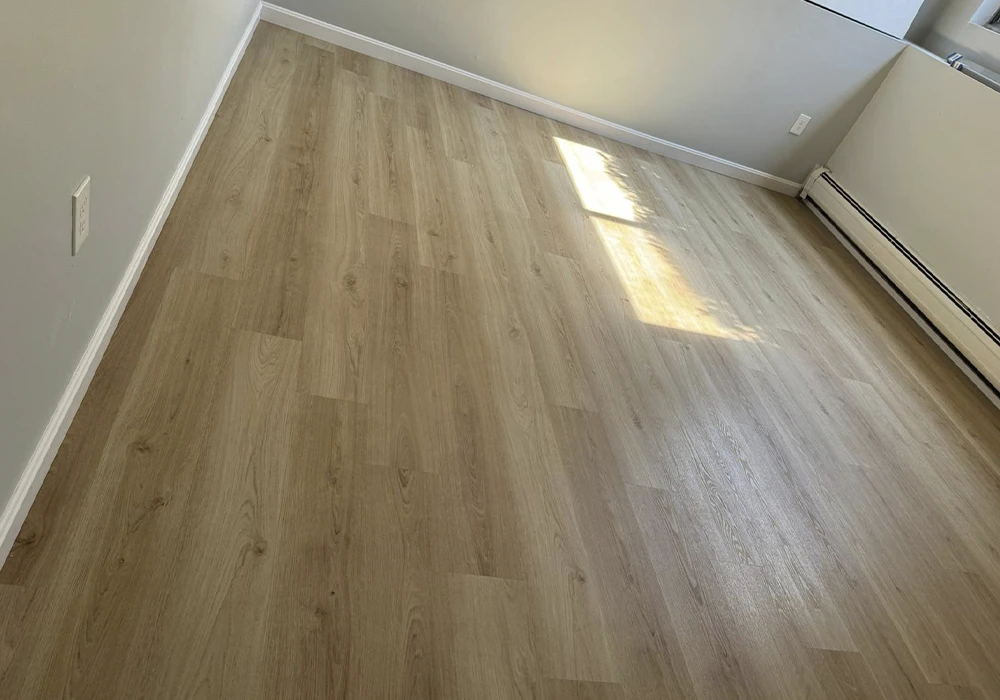
Homeowners dealing with heavy entry traffic often decide that high-risk mudrooms require surfaces built for severe moisture. In high-traffic mudrooms and foyers, many homeowners choose to upgrade these specific zones with waterproof luxury vinyl flooring, giving them complete peace of mind while preserving hardwood in adjacent living areas.
When Road Salt Stains Require Sanding and Professional Refinishing
Wiping and cleaning only work while the damage stays isolated to the surface finish. Once road salt breaches the polyurethane and oxidizes within the wood grain, surface cleaners will not solve the issue.
Deep salt damage shows up as gray or blackened board edges, splintered seams, and areas where the finish has flaked off to expose bare, rough timber. Recognizing the clear signs your hardwood floor needs refinishing helps you intervene before moisture causes irreversible rot in the boards and subfloor. Professional dustless sanding strips off the oxidized top layer, levels raised board edges, removes embedded salt residue, and applies commercial-grade polyurethane that seals the home for upcoming seasons.
When boards have been exposed to salt brine over multiple New England winters, checking whether to replace or repair damaged wood floors ensures you make the right investment. An experienced contractor can replace severely rotted planks around entryways and blend them seamlessly into the rest of the floor before applying fresh protective coats.
Hardwood Floor Care and Restoration by VIP Flooring Pro
VIP Flooring Pro provides expert hardwood refinishing, floor repair, and precision hardwood installation throughout Bellingham, MA, and surrounding Norfolk, Worcester, and Middlesex counties. Working directly across Massachusetts since 2013, founder Deivson Silva and his crew have over 11 years of specialized experience resolving the unique winter wear that local homes face.
Every project begins with a practical assessment of finish wear, salt penetration, and board stability. VIP Flooring Pro is fully licensed and insured, delivers customized written estimates within 24 hours, and provides a 1-year warranty on all installation work. From screening and recoating high-traffic entryways to completing full dustless refinishing projects, the team focuses on punctual service, clean execution, and long-term durability.
Protect Your Hardwood Floors Before Winter Damage Spreads
Hardwood floors are an essential investment, and protecting them against harsh winter salt is far less expensive than replacing ruined lumber. Addressing scratches, cloudy finishes, and moisture intrusion early keeps your home functional and safeguards your property value throughout the year.
If road salt and melting snow have worn down your hardwood floors in Massachusetts, call (774) 777-9720 to schedule an on-site evaluation and receive your comprehensive quote within 24 hours.