Table of Contents
- How Sheen Levels Affect Surface Visibility
- Gloss Finishes: Why High Reflection Exposes Everyday Imperfections
- Satin Finishes: The Practical Balance for Active Homes
- Matte Finishes: The Strongest Defense Against Scratches and Dust
- Why Local Sunlight and New England Seasons Influence Your Choice
- Professional Hardwood Floor Refinishing by Vip Flooring Pro
- Protect Your Investment with the Right Topcoat
When homeowners plan a hardwood flooring project, most focus on wood species and stain colors. However, the final sheen level has a much bigger impact on how your floor handles daily life. The finish determines how light bounces off the wood surface, which directly dictates whether tiny dust particles, pet claw marks, and shoe scuffs blend in or jump out at visitors.
In Massachusetts, active households deal with seasonal salt, grit from muddy driveways, children running through hallways, and pets tracking dirt indoors. If you choose a topcoat solely based on showroom shine, you may end up with a floor that demands vacuuming twice a day just to look presentable. Choosing the right finish level between matte, satin, and gloss saves hours of cleaning and keeps your hardwood looking clean between regular maintenance cycles.
How Sheen Levels Affect Surface Visibility
Floor sheen is measured by the percentage of light it reflects at a 60-degree angle. The more light a floor reflects, the more it behaves like a mirror.
When a smooth, reflective surface gets scratched, the physical abrasion scatters light unevenly across the damaged groove. The human eye immediately spots that disruption against the surrounding mirror-like background. The same principle applies to everyday household dust and pet dander. On high-reflection floors, small debris sits between the light source and the reflective surface, casting microscopic shadows that make routine settling look like heavy accumulation.
Lower-sheen finishes diffuse light across the wood grain rather than bouncing it straight back into the room. Because light scatters in multiple directions, micro-scratches from dog nails and light surface dust simply melt into the natural texture of the wood. Knowing how to know when it is time to refinish hardwood floors allows you to reset this surface layer and pick a sheen tailored to your household traffic.
Gloss Finishes: Why High Reflection Exposes Everyday Imperfections
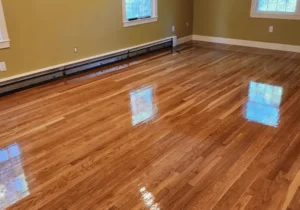
Gloss finishes reflect 70 percent or more of available light, while semi-gloss sits around 45 to 55 percent. Decades ago, high-gloss polyurethane was the standard for newly installed oak floors because it gave wood an unmistakable deep luster.
Today, gloss finishes are rarely recommended for busy residential living areas. Because high gloss creates a near-mirror reflection, every imperfection becomes visible. Paw prints from damp dog pads leave clear dull spots. A fine layer of pollen in the spring creates a cloudy film across the entire room. Foot traffic wearing down socks creates faint micro-abrasions in walking paths that show up clearly whenever sunlight cuts across the room.
Gloss and semi-gloss still have a place in architectural historic restorations, formal dining rooms with minimal foot traffic, or low-use residential libraries. For entryways, kitchens, and living rooms, maintaining a high-gloss finish requires constant sweeping and microfiber dust-mopping to prevent the floor from looking cloudy or scratched.
Satin Finishes: The Practical Balance for Active Homes
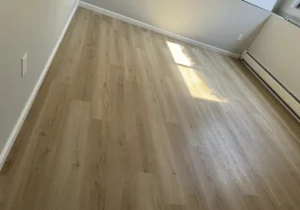
Satin remains the most popular hardwood floor sheen in New England, reflecting roughly 25 to 35 percent of light. It delivers enough warmth to highlight natural wood grain patterns and custom stain tones without turning the surface into a spotlight for dirt.
Because satin diffuses about two-thirds of incoming light, light foot traffic, slight surface scuffs, and daily dust buildup remain largely unnoticeable between cleanings. It offers an ideal compromise for homeowners who prefer a classic, finished appearance but do not want to worry about every pet claw step.
Satin works exceptionally well on domestic hardwoods like red oak, white oak, and hickory. When investing in proper maintenance, choosing a satin topcoat during hardwood floor refinishing adds dependable resale value because potential buyers appreciate its clean, low-maintenance upkeep during open houses.
Matte Finishes: The Strongest Defense Against Scratches and Dust
Matte finishes reflect between 10 and 20 percent of light, while extra-matte or flat options reflect less than 10 percent. Rather than coating the wood in a visible layer of shine, modern matte sealers preserve the raw, organic look of dry timber.
For homes with large dogs, toddlers, and direct outdoor access, matte finishes provide the highest level of scratch and dust concealment on the market. Dog claws slide across the protective urethane without leaving bright, white scratch marks because there is no reflective barrier to disrupt. Pet dander, tracked-in sand, and dust settle onto the floor without catching specular highlights.
Homeowners dealing with active pets often consult our guide to pet-friendly flooring options in Massachusetts to find surface solutions that hold up over time. If your existing solid hardwood is structurally sound, stripping the old high-shine coat and applying a professional matte finish solves the problem of visible pet wear without requiring a full floor replacement.
Why Local Sunlight and New England Seasons Influence Your Choice
Room orientation and regional weather patterns play a direct role in how your floor finish performs inside your home.
During New England winters, the sun sits low on the southern horizon. Low-angle sunlight pours deep into living rooms and dining rooms, hitting floors at a sharp angle that exaggerates surface defects. A high-gloss floor in a south-facing room will reveal every missed dust bunny and surface swirl whenever the afternoon sun enters. A matte or satin finish keeps those low-angle beams from calling attention to daily dust.
Seasonal transitions also introduce foreign debris into local homes. In winter and early spring, boots carry road salt, sand, and moisture past entry mats. Coarser particles act like sandpaper under foot pressure. While no finish prevents physical gouges from sharp rocks wedged in boots, lower sheens hide the micro-scratches caused by winter grit far better than reflective topcoats. If your current finish has already lost its integrity from seasons of salt exposure, check for the signs your hardwood floor needs refinishing before grit wears through the protective seal down to bare timber.
Professional Hardwood Floor Refinishing by Vip Flooring Pro
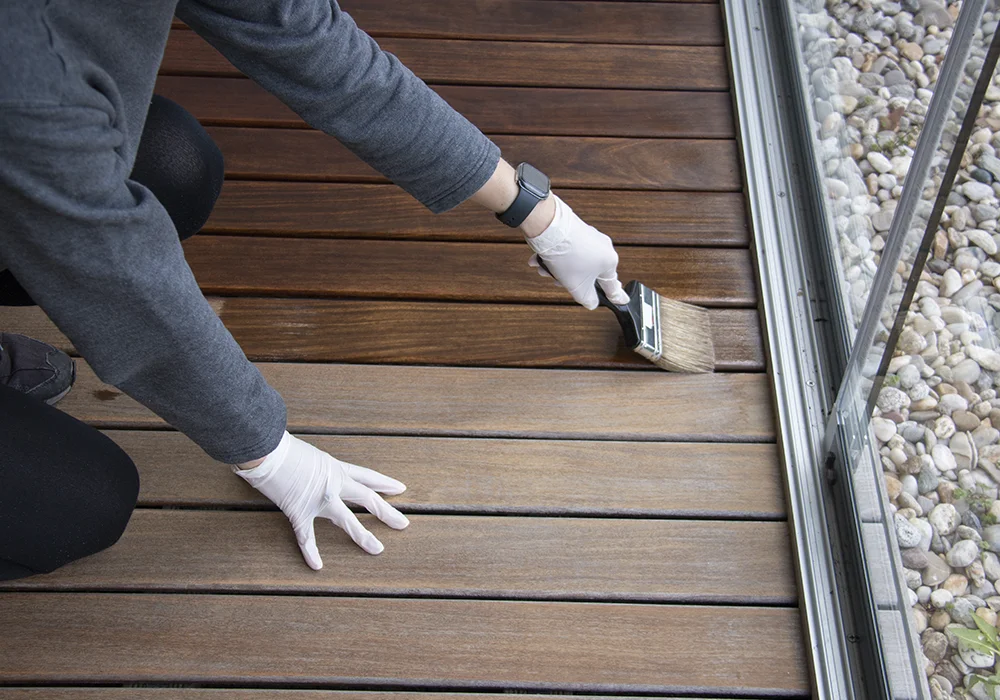
Selecting the right sheen is only half the battle; proper application determines how long that finish protects your wood. Uneven sanding, improper buffing between coats, or low-grade sealers can leave streaks, lap marks, or premature peeling.
Vip Flooring Pro brings over 11 years of hands-on hardwood experience to residential properties across Bellingham, Franklin, Medway, and surrounding Massachusetts communities. Founded by Deivson Tassio de Oliveira Silva, our licensed and insured team focuses on precision sanding, thorough surface preparation, and durable commercial-grade finishes that stand up to daily family life.
We bring physical finish and stain samples directly to your home so you can observe how matte and satin topcoats interact with your room’s specific lighting before making a decision. Every installation project is backed by our dedicated 1-year warranty, and we provide clear, itemized quotes within 24 hours of your initial on-site consultation.
Protect Your Investment with the Right Topcoat
If your current hardwood floors show every claw mark, footprint, and speck of dust, you do not need to replace your entire flooring system. Stripping away an outdated, high-maintenance gloss finish and applying a durable satin or matte protective coat restores the beauty of your wood while cutting your cleaning routine in half.
Contact Vip Flooring Pro today at (774) 777-9720 to discuss your hardwood refinishing project in Bellingham, MA, and receive an upfront estimate within 24 hours.